



Categories
- News From Haomei (338)
Aluminum fin stock foil for air conditioner is a core functional material in air conditioning heat exchangers (evaporators and condensers), primarily used to expand the heat exchange area and improve heat exchange efficiency. It is an indispensable key component for residential, commercial, and industrial air conditioners. As technicians at Haomei Aluminum with many years of experience in air conditioning aluminum foil production, our aluminum fin stock foil products, with their precision manufacturing and stable performance, serve over 60 air conditioning manufacturers worldwide, and have passed international certifications such as EU RoHS and US ASTM B209, adapting to various air conditioning heat exchange scenarios and empowering the air conditioning industry with professional quality.
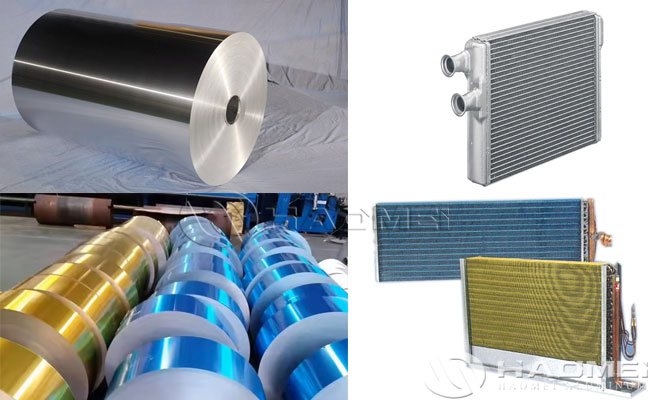
Classified by surface treatment process, aluminum fin stock foil for air conditioner is mainly divided into three categories: plain foil, hydrophilic foil, and hydrophobic foil. Each type of product has distinct characteristics and is precisely adapted to different air conditioning heat exchange scenarios.
Bare air conditioner aluminum foil is a basic product without surface coating, made of 8011 and 1060 alloy materials, with a thickness ranging from 0.08-0.20mm. It emphasizes high thermal conductivity and low cost, suitable for basic heat exchange needs in dry and clean environments. Our foil exported to small air conditioner factories in Africa and Southeast Asia has a consistently high stamping pass rate of over 99.5%, making it a cost-effective basic choice.
Air conditioner hydrophilic aluminum foil is the mainstream product in the market. Through chromium-free passivation and organic hydrophilic coating treatment, it has a contact angle ≤25°, allowing for rapid condensate drainage and eliminating “water bridging,” improving heat exchange efficiency by 5%-15%. With a thickness concentrated between 0.09-0.15mm, it is widely used in residential and commercial conventional air conditioners. Our hydrophilic foil exported to Europe and North America has obtained UL eco-certification, accounting for 60% of our annual export volume.
Air conditioner hydrophobic aluminum foil is a special type, featuring a unique hydrophobic coating and a contact angle >110°. This prevents condensation from adhering and frosting, making it suitable for special operating conditions such as low temperature and high humidity, and heat pumps. With a thickness of 0.12-0.20mm, it has been tested by customers in Northern Europe and effectively improves heat exchange stability in low-temperature environments, solving the efficiency reduction problem caused by frosting.
Precise specification control is the foundation for ensuring the stable performance of aluminum foil for air conditioners. We rely on a four-roll precision rolling mill and a closed-loop quality control system to establish comprehensive specification standards, ensuring that every parameter meets production and application requirements.
For alloy selection, we mainly use three series: 8011, 1060, and 3003. The 8011 alloy combines formability and cost advantages, accounting for over 90% of total production capacity; 1060 pure aluminum has a thermal conductivity of 237W/(m·K), suitable for ultra-thin fins; and the 3003 alloy has high strength and excellent corrosion resistance, making it suitable for harsh environments.
Thickness specifications cover 0.08-0.20mm, with precise tolerance control within ±0.002mm, solving industry pain points such as wrinkling in thin foil and poor thermal conductivity in thick foil; width covers 140-1300mm, and can be customized according to customer fin molds; the core adopts the 76mm/152mm international standard, compatible with mainstream global fin stamping equipment.
State control is divided into three states: O, H22, and H24, respectively adapting to complex stamping, conventional forming, and high-strength requirements, ensuring no cracks or springback after fin forming.
Key core characteristics are crucial for enhancing the heat exchange efficiency of aluminum fin foil used in air conditioning. Combining the inherent properties of the material with our process innovation, the product achieves breakthroughs in three core characteristics: thermal conductivity, formability, and corrosion resistance, fully adapting to the operating requirements of air conditioning heat exchangers.
In terms of thermal conductivity, the continuous casting and rolling + multi-pass cold rolling process optimizes the aluminum foil grain structure, stabilizing the thermal conductivity at 200-237 W/(m·K), 3%-5% higher than the industry average, effectively improving the heat exchanger’s efficiency.
Regarding forming performance, precise control of the annealing temperature at 380-420℃ maintains the aluminum foil elongation at 20%-35%, suitable for high-speed stamping (up to 1200 strokes/minute), with no burrs or coating peeling, significantly improving customer production efficiency.
For corrosion resistance, chromium-free passivation treatment is used, achieving 480-720 hours of neutral salt spray testing, effectively resisting condensate and dust corrosion, extending the heat exchanger’s lifespan. Long-term customer feedback indicates that the fin failure rate has decreased to below 0.1%.
Combining years of production and export experience, the product’s advantages permeate all aspects of production, application, and cost, helping customers enhance their product competitiveness.
On the production side, we achieve large-scale continuous production with coil lengths ranging from 6000 to 10000 meters, reducing the number of roll changes for customers and shortening roll changedown time by 30%. The defect rate is controlled below 0.05%, ensuring the stability of mass production.
On the application side, precision finned aluminum foil improves the energy efficiency ratio of air conditioners by 5%-10%, meeting energy-saving standards such as EU ERP and US Energy Star, helping customers capture the global market. It is also compatible with various fin structures, requiring no adjustments to production equipment, demonstrating strong compatibility.
On the cost side, through process optimization and large-scale production, our export FOB prices are 10%-15% lower than those of Japanese and Korean manufacturers. Furthermore, the ultra-thin design reduces material usage, further lowering customer production costs.
As an export-oriented enterprise, our air conditioner aluminum fin stock foil has passed major global certifications, adapting to the technical specifications of different regions. We have established a professional technical team to provide customized services such as fin design optimization and stamping parameter guidance. Currently, our products have been exported to more than 30 countries and regions and have gained unanimous recognition from air conditioning manufacturers worldwide.
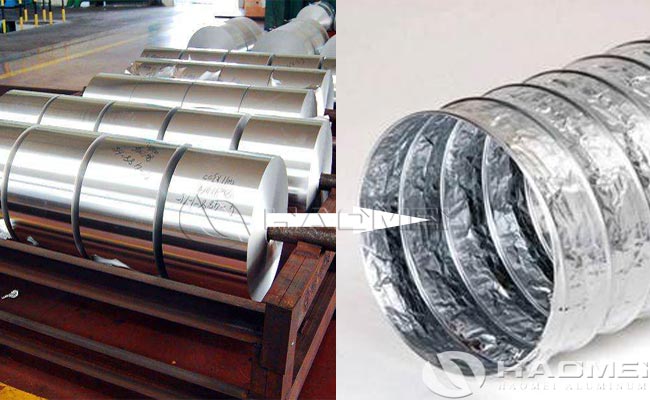 Aluminum Foil For Ducting
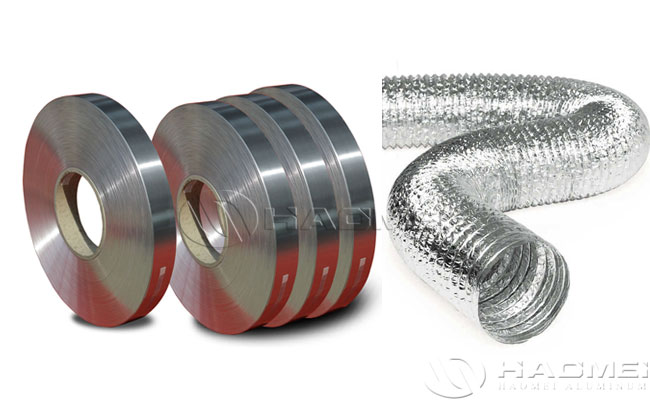 8011 Aluminium Foil For Semi Rigid Ducting
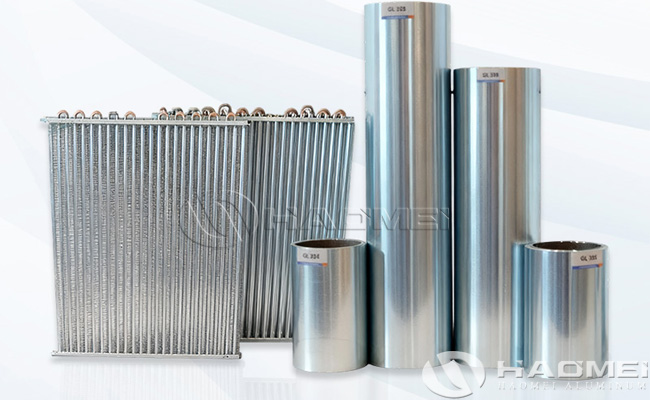 3003 Aluminum Fin Stock For Air Conditioner
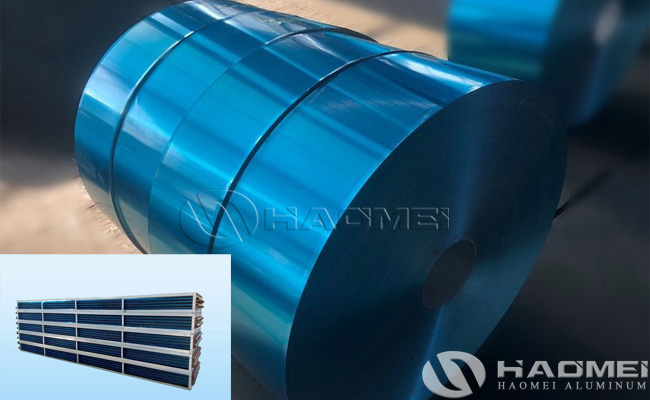 Blue Hydrophilic Air Conditioner Foil