



Categories
- News From Haomei (352)
In the pharmaceutical packaging field, PTP (Press Through Packaging) aluminum foil, with its excellent barrier properties, formability, and tearability, has become a core material for solid dosage form blister packaging. As a manufacturer specializing in aluminum foil R&D and production, we deeply understand that the performance advantages of PTP aluminum foil stem from its precise multi-layer structural design. Different structural combinations can precisely match the core needs of different packaging scenarios.

The core value carrier of PTP aluminum foil is its multi-layer composite structure. The mainstream structures are mainly divided into two systems: unprinted and printed. Both structures use food-grade aluminum alloy as the base material, and achieve performance enhancement through the precise lamination of functional coatings.
Unprinted PTP aluminum foil adopts a three-layer structure of “Primer(OP)/HSL/AL,” in which the base aluminum foil uses 8011 or 8021 grade aluminum alloy. These two grades, due to their excellent ductility and pinhole control capabilities, have become the preferred base material for PTP aluminum foil. The substrate thickness is typically controlled within 20μm ± 1μm. This thickness range balances molding depth (≥1.2mm) and puncture force requirements (3-8N for adults, ≥15N for child-proof tear resistance). The base coating uses polyurethane-modified acrylic resin, 3-5μm thick. Its core function is to enhance the adhesion between the aluminum foil and the subsequent HSL layer, preventing coating peeling during processing, and simultaneously improving the aluminum foil’s temperature resistance, allowing it to withstand the temperature shock of sterilization processes at 121℃. The HSL (Heat Seal Layer) uses a polyethylene-acrylic copolymer, 5-7μm thick, with a melting temperature controlled at 105-115℃. Its heat seal strength with PVC or PP blister substrates reaches 1.5-2.5N/15mm, meeting packaging seal integrity requirements.
The printed PTP aluminum foil uses a four layer structure: “OP/Ink/AL/HSL.” An ink layer and an OP (Over Print Varnish) protective layer are added to the unprinted structure, suitable for scenarios requiring brand logos and product information display. The ink layer uses food-grade gravure ink, employing a benzene-soluble polyamide system, with a thickness of 1-2 μm. This ink system exhibits excellent adhesion and migration resistance, with heavy metal residues (lead, cadmium, mercury) ≤0.1 mg/kg. The OP protective layer uses high-gloss polyurethane resin, with a thickness of 2-3 μm. This not only enhances the gloss and abrasion resistance of the printed pattern (abrasion resistance ≥300 times/200g weight) but also strengthens the aluminum foil’s moisture resistance. After being placed in an environment with 85% relative humidity and 25℃ for 72 hours, the aluminum foil surface shows no fogging or discoloration. It is important to note that the total coating thickness of the printed structure is strictly controlled within 15-20 μm to ensure that it does not affect the aluminum foil’s forming performance, and the stiffness of the formed blister is consistent with that of the unprinted PTP aluminum foil.
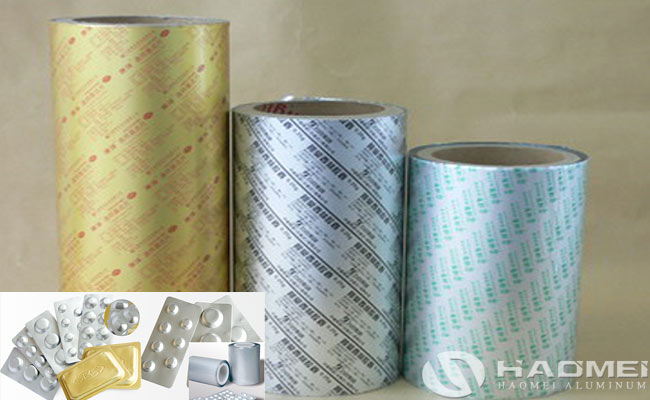
From the perspective of precise control of specifications, the key technical indicators of PTP aluminum foil are all centered around the structural design. In addition to the thickness parameters mentioned above, the pinhole density of the aluminum foil substrate is a core quality control indicator. For a 20μm thick substrate, the number of pinholes should be ≤3/m² (pinhole diameter ≥0.3mm). This indicator is achieved through a high-precision rolling process, effectively preventing oxygen and water vapor penetration. Regarding barrier properties, the oxygen permeability of both unprinted and printed PTP aluminum foil is ≤0.5cm³/(m²·24h·0.1MPa), and the water vapor permeability is ≤0.3g/(m²·24h). This performance level can extend the shelf life of the packaged medicine to 2-3 years. In terms of processing adaptability, both types of PTP aluminum foil are compatible with high-speed blister packaging machines, with a maximum operating speed of 300 packs/minute. The coating shows no cracking or peeling during die-cutting, heat sealing, and other processing stages.
Based on the above structural design and specification control, PTP aluminum foil exhibits irreplaceable application advantages in the pharmaceutical packaging field. Firstly, its precise barrier properties effectively isolate oxygen, water vapor, and external contaminants, preventing the medicine from absorbing moisture and oxidizing, making it particularly suitable for tablets and capsules where high stability is required. Secondly, its excellent forming and tearing properties ensure the integrity and consistency of blister packaging while allowing consumers to easily puncture and remove the contents. The child-proof design also enhances packaging safety. Thirdly, the pre-printed, multi-functional coating system integrates product identification and protective functions, reducing subsequent processing steps and improving packaging efficiency. Actual application data shows that medicines packaged with our PTP aluminum foil achieved a 99.8% pass rate in warehousing tests across various climates in multiple locations nationwide, a 3-5 percentage point increase compared to ordinary aluminum foil packaging.
In summary, the performance advantages of PTP aluminum foil stem from its precise multi-layered design and strict specification control. The differentiated design of unprinted and printed structures comprehensively covers the needs of different pharmaceutical packaging scenarios. As a professional manufacturer, we have achieved a precise balance between cost and performance while ensuring product technical performance through optimized coating formulations and rolling processes. In the future, we will continue to focus on structural optimization and technological innovation to provide the global pharmaceutical packaging industry with more competitive PTP aluminum foil products and technical solutions.
 Gold Hydrophilic Aluminum Fin Stock
 Industrial Aluminum Foil Jumbo Roll
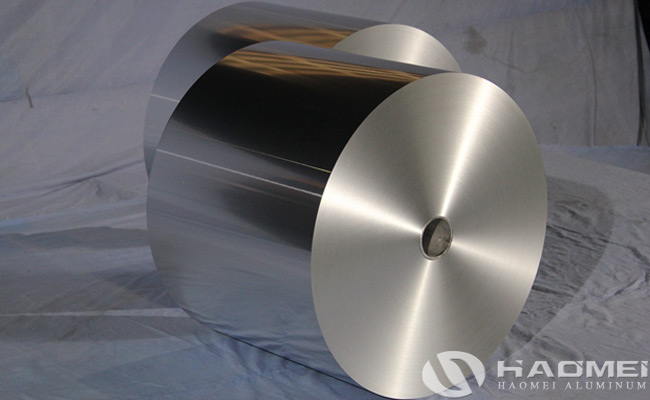 China Industrial Aluminum Foil Rolls
 Aluminium Foil With Paper Backing
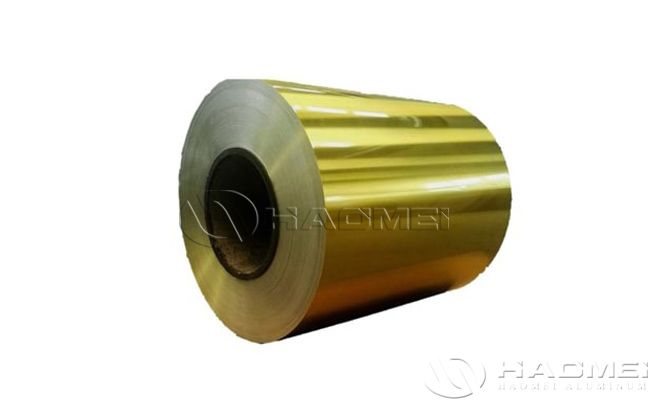 Anti-Corrosion Epoxy-Coated Aluminum Foil For Air Conditioner